

Guidance on Artificial Intelligence in Schools (Department of Education & Youth, 2025)
Estimated reading time: 4 minutes
Released in October, 2025, the purpose of the Guidance on AI in Schools document is to support school leaders and teachers to develop an understanding and knowledge of relevant considerations regarding the use of AI in teaching and learning and school leadership.
The guidance acknowledges the potential benefits of AI in schools, whilst also recognising the compliance and ethical challenges. It links AI use with the regulations outlined in the EU AI Act as well as the EU Ethical Guidelines (updated in 2026) outlining the need for schools to adopt an ethical approach in adopting AI.
In particular, it outlines seven key requirements, adapted from the Guidelines for the Responsible Use of AI in the Public Service:
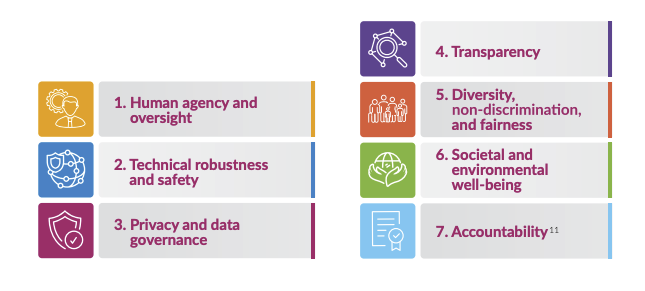
1. Human Agency and Oversight
AI should never replace human decision-making. Teachers and school leaders remain at the core of educational decision-making (human-in-the-loop) and should always review, verify and adapt AI-generated content.
2. Technical robustness and safety
AI tools chosen by schools should be checked to ensure their reliability and safety. Age restrictions should be observed in all cases and schools should oversee the use of such tools in an educational context.
3. Privacy and data governance
Personal data must be protected at all times. Schools should ensure AI tools comply with GDPR and the school’s AUP. Schools must avoid entering personal or sensitive information into AI systems.
4. Transparency
It is important that users of AI are transparent about its use and should be able to explain how AI has contributed to decisions or content.
5. Diversity, non-discrimination and fairness
AI should support all learners fairly and inclusively. AI can reflect bias and educators must always check AI outputs to avoid any unintentional disadvantage to students.
6. Societal and environmental wellbeing
AI use should help contribute to the wellbeing of students, as well as inclusion and sustainability. Consideration must be given to its broader social and environmental impacts.
7. Accountability
Schools must ensure that AI is incorporated into relevant policies and that there is clarity around how AI is used. The use of AI should be monitored continually and issues addressed if they arise.
The Guidance also explores current uses of AI in education.
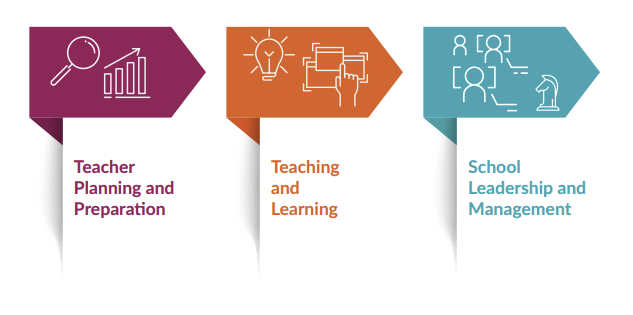
These are summarised on our dedicated webpages for primary and post-primary:
The 4P Approach
The Guidance recommends the 4P Approach for planning of AI implementation in a school.
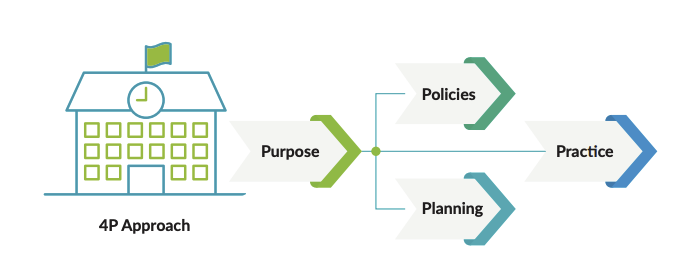
- Purpose: Establishing a clear purpose for using AI.
- Planning: Ensuring that the use of AI aligns with existing school plans, such as the digital learning plan and school improvement plan.
- Policies: Reviewing existing policies to ensure responsible and effective implementation of AI.
- Practice: Setting expectations for the practical use of AI to optimise learning while ensuring alignment with the curriculum, safeguarding student wellbeing and maintaining the central role of the teacher.
Access the Guidance Document
Read the Department of Education’s Guidance for Artificial Intelligence in Schools.
Note that the Guidance does not incorporate rules and procedures for the completion of coursework for assessment. The States Examination Commission (SEC) outlines their approach to the use of AI in coursework in their Coursework Rules and Procedures document.